
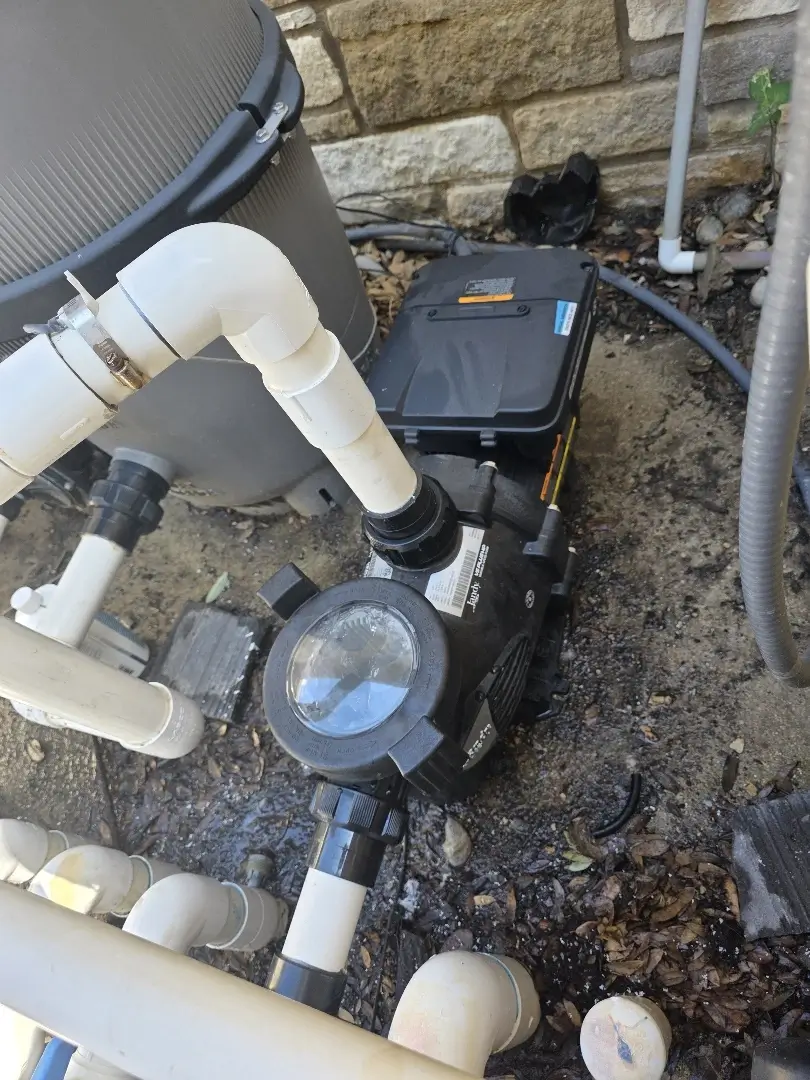
Here we go again. The pool pump is making a loud noise, or it is just not restarting. Without the pool pump on, your swimming pool water will not circulate. In the middle of summer, it will take just a few days to grow algae as chlorine will not circulate in the water and the water will not get any filtration.
If your pool is more than 5 to 7 years old, it is likely that your pool pump has a single-speed motor. On July 19 2021, the DOE (Department of Energy) mandated that pool pumps for in-ground residential pools must be variable speed pumps. There are still exceptions for smaller pumps with a motor of 1HP (Horse Power) or less. The change was made as single-speed pumps are not energy efficient and increase the demand of electricity for pool owners. A single speed pump always run at its maximum speed: 3450 RPM (Revolutions Per Minute). In a home with a pool, the main pool pump is the appliance consuming the most electricity after the AC unit. If your main pool pump is old and giving you trouble, it is best to upgrade to a variable speed pump to avoid costly repairs and benefit from energy savings. If your single speed pump stops running, it is typically not just a capacitor or motor issue. Most often than not, once we open a pool pump to replace the motor, we find that other parts need to be replaced (impeller, seal plate, capacitor or housing). Those projects tend to snowball in costly repair, best is to upgrade to a variable speed pump and start fresh with a pump under manufacturer warranty.
Key Takeaways
- Variable speed pool pumps are now required for most inground pools due to new energy efficiency regulations.
- They reduce energy costs by running at lower speeds, often paying for themselves within 2.5 years.
- To choose the right pump, you’ll need your current setup details like automation panel, horsepower, and model.
- Rebates and compatibility make professional installation the smartest and most cost-effective choice.
Benefits of a Variable Speed Pump
The benefits of a variable speed pump are straight forward. As a pool owner, you can program the pump to run at different speeds during the day to achieve the same amount of circulation for your pool. Instead of a motor running at maximum capacity for 8 to 10 hours, you can run the pump longer at a lower speed. By running the pump at a lower speed, the pump will consume less energy. A variable speed pump is the only piece of pool equipment paying for itself. Typical pay back is 2.5 years.
Choosing the Right Variable Speed Pump
Now that you are ready for a new variable speed pump, let’s identify which one is right for your pool.
To choose the right variable-speed pump, we need to collect the following information:
- Presence of an automation panel
- Size of the current pool pump motor
- Model of the current pool pump
- Rebate eligibility
Do You Have an Automation Panel?

The variable speed pump will need to communicate with your automation panel for the schedule and speed set up. Ideally, you will be able to control your variable speed pump from your mobile app (Screenlogic, Iaqualink or Omnilogic). We recommend matching the brand of your automation panel with your new variable speed pump. Here is the check list:
- Jandy Variable Speed Pump for iAqualink or Aqualink automation panels
- Pentair Variable Speed Pump for Pentair Easytouch, Intellitouch or Intellicenter panels
- Hayward Variable Speed Pump for Hayward Ecommand, Omnilogic or Pro-Logic panels.
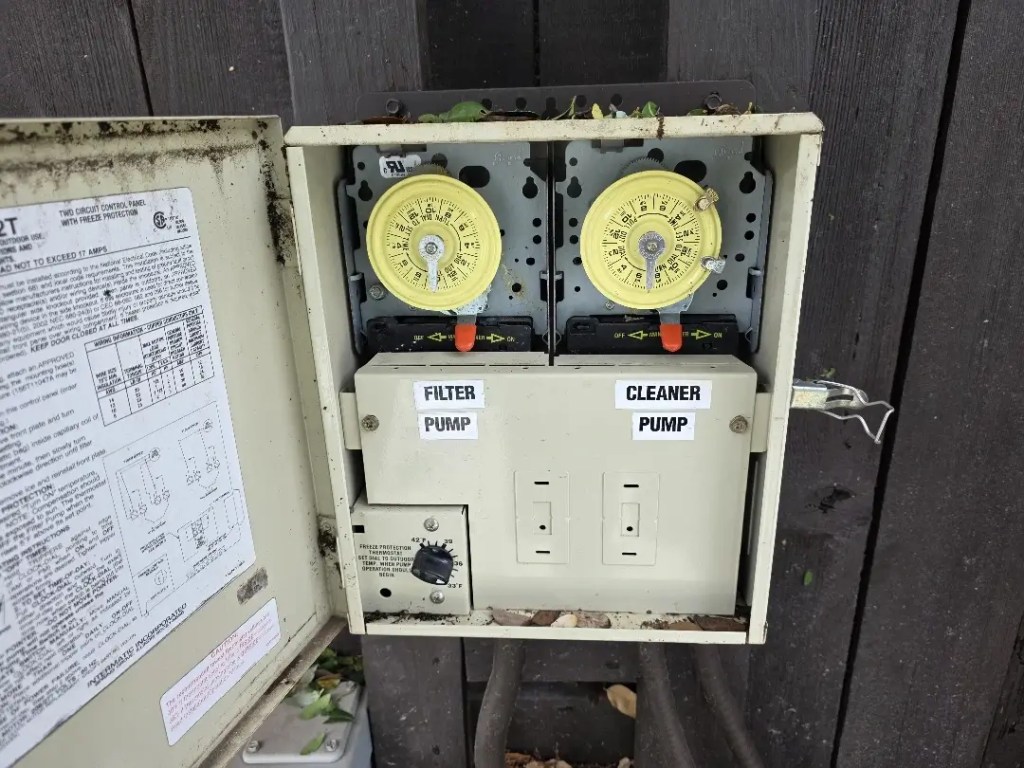
If your pool pump operates from a timer (typically an Intermatic timer with yellow clocks), you can choose any brand.
What’s Your Current Pump’s Horsepower?
Your pool was designed by your pool builder to have enough circulation. Typically, the pool builder will have chose a pool pump so that the entire water in your pool goes through the filter twice a day (turnover). To choose the right variable speed pump, we want to know the size of the current pool pump. Once we have that, we will choose a motor larger than the current one. The idea is to have a larger motor, so that that pool pump can move the same amount of water while consuming less electricity.

The size of the motor will be on the motor of the pump. We are looking for the Horse Power. If your current pump is outdated, this is a great time to consider a pool pump replacement that offers better performance and quieter operation.
What’s the Model of Your Current Pump?
Now that we have the panel and motor information, we need to check the impact on your plumbing. Each pump has a different size (length, height, and width). Not every pump can fit in your equipment pad. The large manufacturers know that and design specific pumps for builders and some for service-companies. The difference is that the builders can fit any pump they want as they are designing the plumbing. For a service company, we need to fit the new pump in your existing plumbing.

For example, the Jandy ePump is larger than most pumps and does not fit in all scenarios. However, the Jandy Flopro pump has a different size and can fit in all scenarios. We typically recommend the Jandy ePump only as a replacement to the Jandy Stealth Pump (ePump is the natural successor to Stealth). You can typically find the model of the pump on the pump housing. If you cannot find it, we will be able to tell which pump you have based on a picture (e.g. Pentair Challenger).

Are You Eligible for Rebates?
Utilities companies like Austin Energy offer a $300 rebate to pool owners for installing a new variable speed pump with a participating contractor like Aqua Clear Pool Care. This makes a pool pump energy savings upgrade more affordable than ever. To benefit from the rebate, you need to
- Choose a pump that meets Austin Energy’s energy efficiency criteria
- Hire an installer which meets the requirements from the program (RAIL License, Insurance, Worker Compensation).
The large manufacturers (Jandy, Pentair and Hayward) have all developed calculators for pool owners to calculate their savings:
Recommended Variable Speed Pumps by Setup
Now that you have all this information, here are our recommendations for new variable speed pump:
| Current Motor Size | Hayward Panel | Pentair Panel | Jandy Panel | No Panel |
| 1.5 HP or Less | TriStar® VS 900 Variable Speed Pump 1.85HPOrTriStar® VS 950 Variable Speed Pump 2.7HP | SuperFlo® VST Variable Speed Pump 2.2THPOrWhisperFlo® VST Variable Speed Pool Pump 2.6 THPOrIntelliFlo3® VSF Pump 3 THP | VS FloPro™ Variable Speed Pump 1.85 HPorVS FloPro™ Variable Speed Pump 2.7HPOrePump™ Variable Speed Pump 2.7HP(recommended only if current pump is Jandy Stealth) | Any from the recommended pumps on this line |
| 2.0 HP or More | TriStar® VS 950 Variable Speed Pump 2.7HP | WhisperFlo® VST Variable Speed Pool Pump 2.6 THPOrIntelliFlo3® VSF Pump 3 THP | VS FloPro™ Variable Speed Pump 2.7HPOrePump™ Variable Speed Pump 2.7HP(recommended only if current pump is Jandy Stealth) | Any from the recommended pumps on this line |
Upgrade to a Variable Speed Pump Today
If your old pump is on its way out, don’t throw good money at a patch job. A new variable speed pump is quieter, more efficient, and backed by warranty. Plus, with rebates and energy savings, it’s one of the few upgrades that genuinely pays for itself.
Looking for the most efficient pump for your Austin backyard? Beyond equipment sales, we offer expert pool pump repair and installation across Round Rock, Pflugerville, and Leander. Start saving on your energy bills today!
Don’t let poor equipment disrupt your swim season—start saving on your energy bills and ensure top-tier pool repairs today!


Leave a Reply