
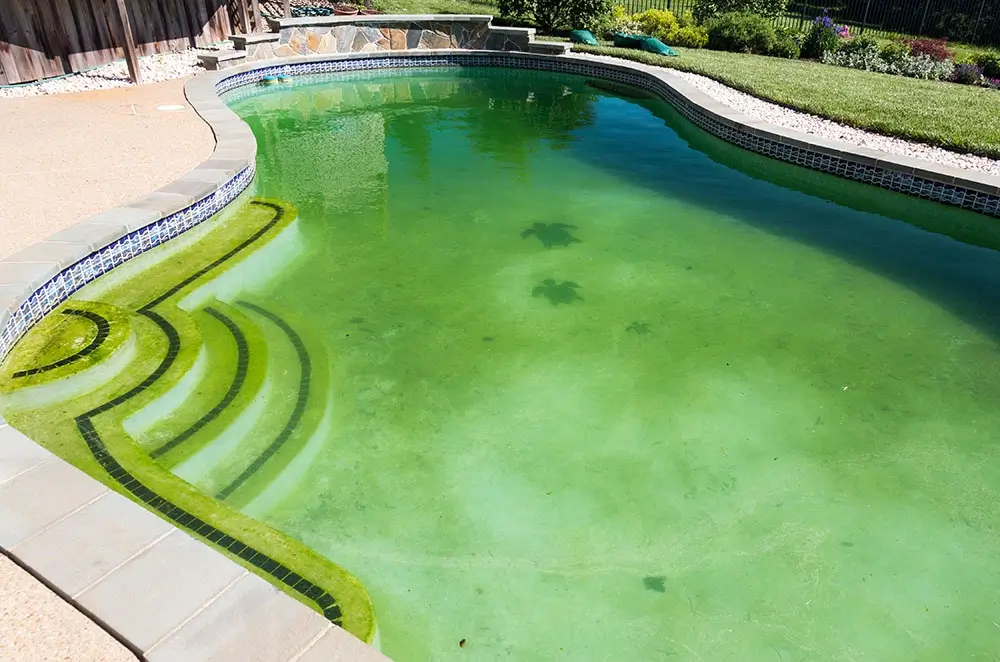
Swimming in green pool water is, at the very least, an error in judgment. At worst, it’s a serious health concern. But maintaining a clear pool here in Austin isn’t just about a few swim-friendly months of “pool season.” Between Oak Season and those pesky Triple Digit Streaks, keeping your pool clean is a year-round endeavor. Does your filter get choked with pollen every March? April showers Live Oak tassels all over your skimmer baskets? Have you calculated how quickly that August sun can devour your chlorine levels? Less than two hours if you’re not careful. Keeping your Austin pool clear comes with some unique challenges.
Whether it’s algae, improper chemical balance, too many phosphates or poor filtration, there are several likely offenders for that green water. In fact, 85% of pool owners will deal with algae growth eventually. But with proper maintenance, you can correct a green pool and keep it from returning – and save thousands of gallons of water while you’re at it.
Key Takeaways
- Algae growth causes green pool water more than anything else — and the Austin sun amplifies the issue.
- Phosphates from grass clippings and leaves are another stealth culprit, particularly in Westlake Hills, Tarrytown, and wooded areas.
- Imbalanced chemicals will render your chlorine useless — even if you’re diligently shocking.
- When it’s 100°F outside for weeks on end, your normal pump runtime won’t cut it.
- If you want blue water, skimming/filter maintenance is mandatory.
- Treating your pool early with Green to Clean, when it first turns green, can protect you from draining tens of thousands of gallons of water.
Consider a Professional Pool Inspection
Consider a Professional Pool Inspection: Sometimes you just can’t figure out why your pool continues to turn green. If this is the case, it might be time to call in a professional to inspect your pool. They can identify underlying problems with your circulation or filtration systems or even leak that you may have overlooked – and stress you out less time and money.
Green Pools 101: Algae Growth: #1 Reason Pools Turn Green

Under ideal circumstances, green algae populations can double every 24 hours. With Austin water temperatures reaching 90°F+ that clock starts ticking quickly. Understanding the types of algae commonly found in Central Texas pools and why they thrive allows you to battle back more effectively.
The 24-Hour Rule
When water temperatures reach 90°F or greater, as they commonly do in Austin from June through September, algae can multiply from nonexistent to noticeable in just 24 hours. Skip a day of chemical maintenance during a mid-summer hot streak and you might come home to an emerald paradise. That’s why preventative maintenance- not waiting until your pool turns green- is the standard here in Austin.
Austin Algae Types at a Glance
| Algae Type | What It Looks Like in Austin | How Hard Is It to Kill? |
|---|---|---|
| Green | Floating “pea soup”; slimy walls and floor | Easy with a shock & brush |
| Mustard | Yellow “dirt” pooling in shady corners (think: under the oak tree) | Difficult — resists low chlorine |
| Black | Dark spots on the plaster, roots into the gunite | Hard — requires specialized brushing + high chlorine |
What Encourages Algae to Grow?

Heading east from Austin? Pflugerville pools. Heading West? Lake Travis and Westlake. Heading North to the Hill Country? Crystal Falls and Leander. Wherever you live in Central Texas, you will have debris challenges. Austin’s trees are gorgeous — but they are also tough on pools. Here’s why: Live Oaks shower their pools with tassels each spring. Pecan trees unload leaves and hulls every fall. Cedar trees blast huge volumes of pollen in the winter. All of this debris drops organic material and phosphates right into your pool where algae love to thrive.
During the height of Oak Season (late March through April), skimmers can become plugged in 4 hours or less. Not only does this starve your pump of water, it causes your pump to lose prime. When your pump is running dry, you’ve got poor circulation which leads to algae. Use a skimmer sock during these months to catch all the fine pollen and tassels before they make it to your filter. This keeps your circulation strong when you need it most.
- Dirty Filter: Clean filters properly remove contaminants from your pool water. Monitor pressure regularly and backwash when necessary.
- Sunlight: Sunlight provides algae with photosynthesis energy. The sun shines directly on Austin area pools 9–10 months each year, providing strong UV rays.
- Temperature: Algae species love warm weather. In Austin, the water temperature often reaches between 80° and 90°F during peak summer months.
- pH Imbalance: Chlorine can’t work effectively if your pool pH is outside of the range 7.2–7.8, even if the chlorine level is perfect.
- Nutrient Availability: Decomposing leaves, pollen, grass clippings, and runoff from fertilized lawns can all provide nutrients for algae.
- Poor Circulation: Run your pump 10–12 hours per day in summer and 6–8 hours per day in winter.
Why the Austin Sun Is Your Pool’s Worst Enemy
Generic advice recommends running your pump for 8 hours per day. During a hot 105°F Austin July, that just won’t cut it. The UV rays of the Texas sun can bleach your pool out in just hours, leaving your water vulnerable to algae and growths.
Recommendations for Austin’s Triple Digit days (and nights):
- Pump Runtime: Increase from default 8 hours to 12 hours per day.
- Check your CYA (cyanuric acid / stabilizer): CYA should be between 30–60 ppm. CYA prevents sun from burning off your chlorine. Too little CYA and chlorine burns off too quickly. If your CYA gets too high (over 100 ppm), your chlorine will no longer work due to “chlorilock.” Visit our Cyanuric Acid Support Doc for detailed tips.
- Chlorine: 1–3 ppm. Test every 1–2 days during the hottest parts of summer, not weekly.
- Shock more often: Expect to shock your pool after heavy bather usage or rainstorms during summer.
Chemical Imbalances
Balanced chemicals help keep your pool clean and swimmers safe. There are three main things you should know: pH, Chlorine, and Alkalinity.
- pH –Ideal range between 7.2–7.8. When outside of this range chlorine becomes much less effective.
- Chlorine – Ideal range 1–3 ppm. This is what keeps your pool free of bacteria and algae.
- Total Alkalinity – Ideal range 80–120 ppm. This helps to buffer your pH levels.
- CYA – 30–60 ppm for chlorine pools and 70 is the max for saltwater pools. If your CYA gets over 100ppm you can get chlorine lock.
- Phosphates – Ideal range is below 200 ppm. Treat with phosphate remover as needed or after pollen season.
High pH + High CYA + High Phosphates equal the “green pool trifecta.” When all three parameters are off simultaneously, there is no amount of chlorine that will rescue you until you fix the imbalances.
Austin’s Hard Water Problem – Liquid Limestone
Austin’s tap water is liquid limestone, but if you’re out in Dripping Springs or Leander, the mineral content can be even more intense. Our city water is famous for having high calcium levels — and when water evaporates from your pool in 105°F summer weather, that calcium stays put.
When your calcium hardness gets too high, it causes two problems: your chemicals work less effectively, AND it leaves white scale on your pool plaster and tile. That black algae builds a home in that scale and can’t be killed with chlorine alone.
If your water feels gritty or you see white build-up on your pool’s tile line or pool floor, it’s time to test your Calcium Hardness. You want your calcium hardness to be between 200–400 ppm. Many Austin pools reach levels way higher than that by August without the owner realizing it – until that stubborn algae shows up and refuses to budge.
Include Calcium Hardness in your monthly testing regimen – particularly if we’ve had a spell of hot, dry weather and your pool has had high evaporation. We test it every month if you’re on a weekly service agreement with us.
Inadequate Filtration

40% of green pool owners point to filtration issues. Pool filters should last 5–7 years on average — if yours is older, consider replacing it.
Symptoms of Ineffective Filtration
- Cloudy Water: You may have a broken filter if your water is consistently cloudy.
- Debris Building up: If you notice a lot of dirt or leaves in your pool, this may be because your filtration system is not capturing contaminants properly.
- Visible Algae: The filtration system may not work properly if algae are visible on the surface even during regular maintenance.
- Loud Noises in the Pump: Loud noises here can mean a broken or struggling filtration system. We can check out your pool pump.
- Low Water Pressure: Low water pressure means the filter could be faulty.
- Small Filter Size: A small filter may struggle with the required water volume and will not clean the water well.
Filtration tips for Summers in Austin:
- Run your pump at least 8–12 hours every day (12+ hours when it’s hotter out)
- Backwash or clean your filter frequently — even more during Oak Season (March-May)
- Turn on your filter longer than normal if you see algae
- Replace old filters (over 5-7 years old)
Austin Water Restrictions: Why Treating Early Saves Water
Austin will go back and forth between Stage 1 and Stage 2 water restrictions all summer. Did you know that a green pool isn’t just an eyesore? It wastes water. If it gets bad enough that you have to drain your pool and refill it you could be wasting thousands of gallons of water.
Treating early with Green to Clean and killing your algae before you have to drain can save your water. It’s better for your wallet, better for Austin’s water restrictions and better for your summer.
15,000-20,000 gallons of water is what the average pool drain and refill uses. A Green to Clean chemical treatment uses 0 gallons of water. Treat early.
How to Prevent Green Pool Water in Austin

egular Maintenance Checklist
- Skim daily: remove leaves, pollen, and dangling tassels from pool surface (Especially during Oak Season)
- Brush weekly: Walls, Steps, Floor. Make sure you are breaking up algae colonies
- Vacuum floor frequently
- Clean skimmer and pump baskets at least 2–3x per week in the spring
- Water chemistry 2x per week in the summer. (pH, Chlorine, CYA)
Chemical Prevention
- Maintain chlorine levels between 1–3 ppm
- Shock the pool after heavy usage or storms, or if chlorine levels drop quickly
- Maintain pH between 7.2–7.6 for optimal sanitizer activity
- Use algaecide preventatively in the warm season
- Run a phosphate remover after spring pollen and following heavy rains.
Saltwater Pool Notes
- Salt Level: Maintain recommended level to allow salt cell to generate chlorine. Clean salt cell frequently, especially if you have hard Austin water.
- Copper Algaecide: Pool RX and others are a supplemental measure to chlorine as a natural algae preventative and give you that extra piece of mind during heat spikes.
Stop Your Pool from Turning Green for Good
Having swamp pool? We service Pflugerville, Round Rock, Georgetown, Cedar Park and can be to your door in no time. Inquire about our Green to Clean service that will have your water crystal clear again in no time without having to drain your pool. Preserve your summer and Austin’s water. A good pool service company will be able to get rid of 95% of algae issues by weekly pool maintenance. Give us a call today.


Leave a Reply