
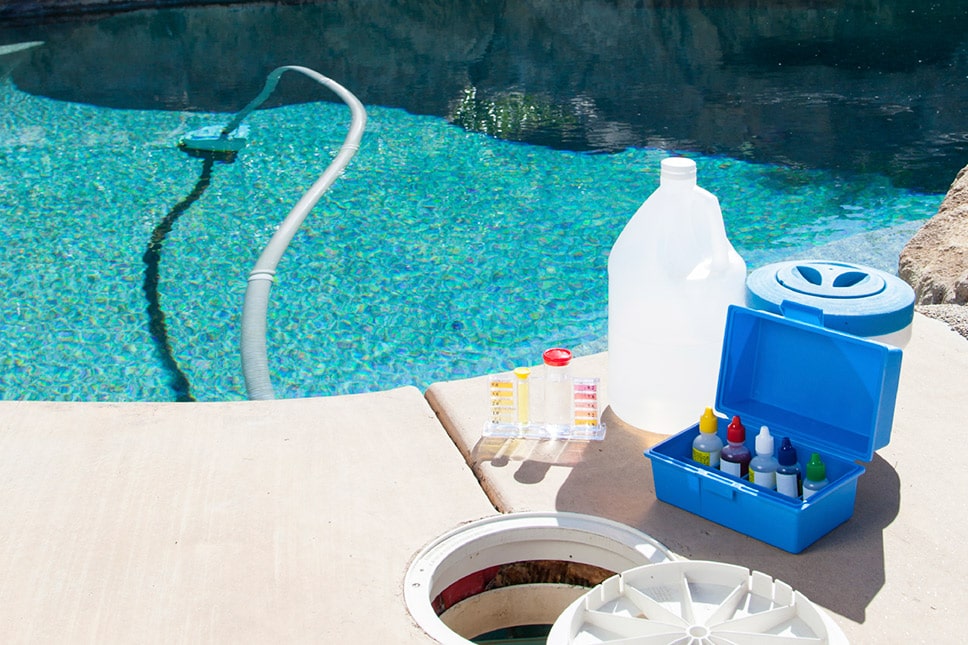
If you own a pool, you probably fantasize about diving into the sparkling water on a hot day. But when you’re dealing with cloudy water or an algae-covered surface, this can turn into frustration. Maintaining your pool using carefully selected chemicals helps ensure a healthy, safe pool for everyone.
Here, we explore the 10 best pool cleaning chemicals. These products will give you water so you can enjoy your swim safely.
Pool Chemistry 101
Understanding pH, alkalinity, sanitizer levels, and calcium hardness is key to a clean pool, and testing kits are essential for monitoring.
Key Chemical Balance Aspects
- pH Levels: pH levels indicate how acidic or basic our pool water is, and it should be between 7.2 and 7.8. Proper pH range prevents skin irritation and keeps sanitizers working.
- Alkalinity: Total alkalinity buffers pH levels. We should aim for 80-120 ppm. Proper alkalinity keeps pH stable and reduces drastic changes.
- Sanitizer Levels: Chlorine and bromine are common sanitizers that kill bacteria. Ideal chlorine levels should be 1-3 ppm, bromine 3-5 ppm.
- Calcium Hardness measures the amount of dissolved calcium in our pool. Keep calcium hardness between 200-400 ppm to prevent corrosion or scaling on pool surfaces.
Testing Kits
Testing kits allow us to measure pH, alkalinity, sanitizer levels, and calcium hardness.
- Types of Kits: There are different kits, such as test strips and liquid test kits. Test strips provide quick results, while liquid kits measure more precisely.
- Frequency of Testing: We should test our pool water at least once a week or more often during heavy use or after rainfall. This way, we can react quickly to any chemical imbalances.
- Interpreting Results: We must understand the numbers. If our pH is too high, we can use a pH reducer. If sanitizer levels are low, we need to add more chlorine.
pH Control: Keeping Pool Water Balanced
Maintaining a pH between 7.2 – 7.8 is key to swimmer comfort, chlorine effectiveness, and preventing scaling or corrosion.
Lowering pH: Muriatic Acid
- Use: Reduces high pH and alkalinity.
- Pros: Fast-acting, prevents scaling.
- Cons: Highly corrosive, requires careful handling.
- How to Use: Dilute in water, add near a return jet, and test after a few hours.
Raising pH: Soda Ash (Sodium Carbonate)
- Use: Increases pH without drastically affecting alkalinity.
- Pros: Quick and effective.
- Cons: Overuse can cause cloudy water.
- How to Use: Pre-dissolve in water, add to the deep end, and retest after a few hours.
Alkalinity Control with Sodium Bicarbonate
Total Alkalinity (TA) stabilizes pH and should be kept between 80 and 120 ppm to prevent water balance issues.
Raising Alkalinity: Sodium Bicarbonate (Baking Soda)
- Use: Increases TA while slightly raising pH.
- Pros: Safe, prevents pH swings, and easy to apply.
- Cons: Overuse can raise pH too much or cause scaling.
- How to Use:
- Add 1.5 lbs per 10,000 gallons to raise TA by ~10 ppm.
- Dissolve in water or sprinkle evenly with the pump running.
- Retest after 6 hours and adjust if needed.
The 10 Best Pool Cleaning Chemicals For A Clear Pool
- Chlorine
Chlorine is the key to pool sanitation. It kills bacteria, viruses, and algae that can cause water problems. Chlorine comes in tablets, liquids, and Cal-Hypo.
Chlorine Tablets (Trichlor)
- Purpose/Function: Slow-dissolving sanitizer that provides a steady chlorine release, often containing a stabilizer (cyanuric acid) to protect against UV breakdown.
- Pros:
- Convenient and easy to use.
- Long-lasting and ideal for maintaining consistent chlorine levels.
- Works well in floating dispensers or automatic feeders.
- Cons:
- Can lower pH and alkalinity over time.
- Requires monitoring to avoid excessive stabilizer buildup.
- Best For: Regular pool maintenance in residential pools.
Liquid Chlorine (Sodium Hypochlorite)
- Purpose/Function: Fast-acting chlorine that quickly raises chlorine levels in pools. It does not contain a stabilizer.
- Pros:
- Effective and easy to dose.
- Doesn’t leave behind residue or buildup.
- Ideal for shock treatments or frequent chlorination.
- Cons:
- Shorter shelf life compared to other forms.
- Can raise pH, requiring adjustment with acid.
- Heavier and bulkier to store and transport.
- Best For: Large pools, commercial pools, or those with automated liquid feeders.
Calcium Hypochlorite (Cal-Hypo)
- Purpose/Function: Granular chlorine with a high percentage of available chlorine. Commonly used for shocking pools.
- Pros:
- Strong and effective for eliminating contaminants and algae.
- Longer shelf life than liquid chlorine.
- No stabilizer so that it won’t contribute to excessive cyanuric acid buildup.
- Cons:
- Can increase calcium hardness over time, potentially leading to scaling.
- Requires pre-dissolving in water before adding to the pool.
- Can be hazardous if not stored properly.
- Best For: Weekly shock treatments or pools with low calcium hardness.
- Staying Safe: If you are using chlorine, don’t mix it with other chemicals. Store in a well-ventilated area away from children and pets. Wear gloves and eye protection when handling to keep yourself safe.
2. Diatomaceous Earth (DE) Powder
Diatomaceous Earth (DE) is a fine powder made from fossilized algae, used as a filter media in DE pool filters. It provides superior filtration by trapping tiny debris and contaminants, keeping pool water crystal clear.
- Purpose/Function: DE is a highly effective filtration aid that captures fine particles as small as 2-5 microns. It enhances water clarity and removes dirt, oils, and some bacteria from the pool.
- Pros: The best filtration of any pool filter media improves water quality significantly. It helps keep the water looking pristine by removing microscopic particles.
- Cons: DE powder must be replenished regularly, as backwashing removes it. Handling it can be messy, and inhaling the fine dust is hazardous. Some regions have disposal restrictions.
- Best For: Pool owners prioritizing superior water clarity and having a DE filtration system. Ideal for pools prone to fine debris or cloudy water.
- Safety Precautions: Always wear a mask and gloves when handling DE powder to prevent inhalation and skin irritation. Avoid breathing in dust, and follow manufacturer guidelines for proper disposal.
3. Algaecide
Algaecides are necessary to prevent and treat algae growth in our pools. Algae makes the water green and slimy. A good algaecide will help us maintain the sparkling clarity of our pool.
Purpose/Function: Prevents and controls algae growth. Different types target different algae species.
Pros: This readily available preventative treatment will help maintain your water clarity.
The cons are that not every type will work with every algae strain, and overusing these products can cause staining in some cases.
Use As: A preventative solution to avoid recurring algae blooms.
Safety First: Always follow safety instructions. Do not overuse algaecides, and keep them out of the reach of children.
4. pH Balancers
For comfort and safety, we need to maintain the proper pH level in our pool, which should be between 7.2 and 7.8. If the pH is too low, it can cause skin irritation and equipment corrosion. If it’s too high, it can cause cloudy water and reduced chlorine effectiveness.
pH Increaser (Sodium Carbonate)
- Purpose/Function: Raises pool water pH.
- Pros: Easy to use, available.
- Cons: Sodium will raise your pool’s alkalinity, so don’t use too much.
- Best For: Adjusting your pool’s pH when it falls below the optimum range.
- Safety: Add small increments and retest the pH before adding more.
pH Decreaser (Sodium Bisulfate)
- Function: Lowers your pool water’s pH levels.
- Cons: Can lower alkalinity if used excessively.
- Safety Precautions: Add in small increments and retest pH before adding more. Wear gloves and eye protection.
5. Alkalinity Increaser
Total alkalinity buffers the pH levels in our pool. It helps stabilize pH changes, making maintaining a safe swimming environment easier. The ideal range for total alkalinity is 80-120 ppm.
Purpose/Function: Raises pool water total alkalinity, helps to buffer pH, and prevents large pH swings.
Pros: Easy to use, available.
Cons: Can raise pH if used excessively.
Best For: Adjusting pool water when total alkalinity is below the recommended range. Essential for pH balance.
Safety Precautions: Add small amounts in first, and retest alkalinity and pH before adding more.
6. Calcium Hardness Increaser
Calcium hardness affects the water’s ability to prevent corrosion and scaling. We want our calcium hardness to be between 200 and 400 ppm. Low calcium levels can cause pool surfaces and equipment corrosion, while high levels can cause scaling and cloudy water.
Purpose/Function: Raises pool water calcium hardness and prevents corrosion of pool equipment and surfaces.
Pros: Effective for increasing calcium hardness.
Cons: Can cloud the water if added too quickly.
Best for: Adjusting pool water when calcium hardness is below the recommended range. Essential for pool infrastructure.
7. Phosphate and Enzyme Remover
Safety Precautions: Follow label instructions, usually by slowly adding to the pool’s deep end while the pump runs. Wear gloves and eye protection.
Phosphate and enzyme removers help keep pool water clean by breaking down organic waste and eliminating phosphates, which fuel algae growth. Together, these products prevent algae problems and reduce chlorine demand.
Purpose/Function:
- Phosphate removers eliminate phosphates, a primary food source for algae. They help keep pool water clear and reduce the need for algaecides.
- Enzyme removers break down organic contaminants, such as body oils, sunscreen, and lotions, improving filtration and water clarity.
Pros:
- Reduces algae growth and chlorine demand.
- Helps prevent scum lines and organic buildup.
- Improves water clarity and filter efficiency.
- Reduces the need for excessive chemical use.
Cons:
- May cause temporary water cloudiness as phosphates are removed.
- Some products require multiple treatments for high phosphate levels.
Best For:
- Pools with recurring algae issues or high bather loads.
- Those looking to reduce chlorine demand and improve overall water balance.
- Ideal for ongoing maintenance to keep water crystal clear and reduce the buildup of oils and lotions.
Recommended Product: Orenda CV-700
Orenda CV-700 is a phosphate and enzyme remover that combines non-toxic, eco-friendly enzymes with phosphate control to keep pools cleaner, clearer, and easier to maintain. It breaks down non-living organics like body oils, lotions, and sunscreen while eliminating phosphates that feed algae.
Safety Precautions:
To ensure proper application, follow dosage instructions, wear gloves and eye protection, and maintain a balanced pool water level before adding the product.
8. Stain Remover
Stains from minerals, organic debris, or rust can make our pool less appealing. Stain removers target these specific issues. We can choose from various stain removal products for different stain types.
Purpose/Function: Removes stains from pool surfaces caused by metals (iron, copper), organic matter, or other contaminants.
Cons: Stain removers like this can be toxic and require careful handling. Choose the right one for the specific stain. Best For: Existing pool walls, floors, or tile stains.
Safety Precautions: Follow the label instructions. Some stain removers may require draining the pool or specific application methods. Wear gloves and eye protection.
9. Saltwater System Chemicals
You must regularly monitor and adjust the chemicals if you have a saltwater system. Saltwater systems produce chlorine, but we must also manage pH, alkalinity, and calcium hardness.
Purpose/Function: Provides the salt for a saltwater chlorine generator to produce chlorine for sanitizing your pool.
Pros: Saltwater pools need chlorine to function correctly. This provides a constant source of chlorine.
Safety Precautions: Store in a dry place. When adding salt to the saltwater system, follow the manufacturer’s instructions.
9. Cyanuric Acid (CYA)
Cyanuric Acid (CYA), a stabilizer or conditioner, helps protect chlorine from being broken down by sunlight. UV rays can quickly degrade chlorine without a stabilizer, making it less effective and requiring more frequent additions.
Purpose/Function:
- Extends the lifespan of chlorine by shielding it from UV degradation.
- Helps maintain consistent chlorine levels, reducing the need for frequent dosing.
Pros:
- Protects chlorine, making it more efficient.
- Reduces chlorine consumption, saving money on chemicals.
- Helps maintain a more stable sanitizer level in outdoor pools.
Cons:
- Overuse can lead to chlorine lock, reducing chlorine effectiveness.
- Requires partial water dilution if levels get too high (>50 ppm).
- Not needed for indoor pools (no UV exposure).
Best For:
- Outdoor pools using liquid chlorine or unstabilized chlorine products.
- Those looking to reduce chlorine loss due to sunlight exposure.
- Maintaining chlorine efficiency during hot summer months.
Safety Precautions:
Handle with gloves to avoid dust inhalation, add small amounts to avoid overcorrection, and never mix directly with chlorine products.
Tips For Safe Chemical Handling And Storage
- Read The Label
We should always read and follow the label. Each chemical has its own handling and storage instructions. - Storage
Store chemicals in a cool, dry place. Separate different types of chemicals to prevent reactions. - Don’t Mix Chemicals
We never mix pool chemicals. Mixing can cause harmful reactions to ourselves or our equipment. - Wear Safety Gear
When handling pool chemicals, we must wear safety gear. This includes gloves and eye protection to prevent spills and splashes. - Proper Disposal
Dispose of unused or expired chemicals according to local regulations. We never throw them in the garbage or pour them down the drain. By following these simple tips, we can safely handle and store our pool cleaning chemicals ourselves and the environment.
Pool Cleaning Schedule
A regular cleaning schedule is key to a sparkling-clean pool. We recommend a schedule with daily, weekly, and monthly tasks.
Daily:
- Skim the surface for leaves and debris.
- Check the water level and adjust if necessary.
- Empty skimmer baskets.
Weekly:
- Vacuum the pool to remove dirt from the bottom.
- Brush the walls and tiles to prevent algae buildup.
- Test water chemistry, pH, and chlorine levels.
Monthly:
- Clean the filters.
- Shock the pool to kill hidden bacteria and algae.
- Inspect pool equipment
- Clean pool equipment as needed
Regularly testing the water chemistry will ensure sufficient chlorine levels and a balanced pH. Minor adjustments now will prevent more significant issues later.
Let the Pros Select the Best Pool Chemicals for Your Pool
To maintain crystal-clear waters all year round, you must choose the right cleaning chemicals. When selecting products, prioritize safety, effectiveness, and ease of use. Key products to consider are chlorine tablets for regular sanitizing, shock treatments after heavy use or rain, and algaecides to prevent algae growth. Consistent maintenance will ensure a clean, safe, and inviting pool all season.
Need expert help keeping your pool spotless? Let Aqua Clear Pool Care handle the maintenance for you! Contact us today for professional pool cleaning and chemical balancing.


Leave a Reply