
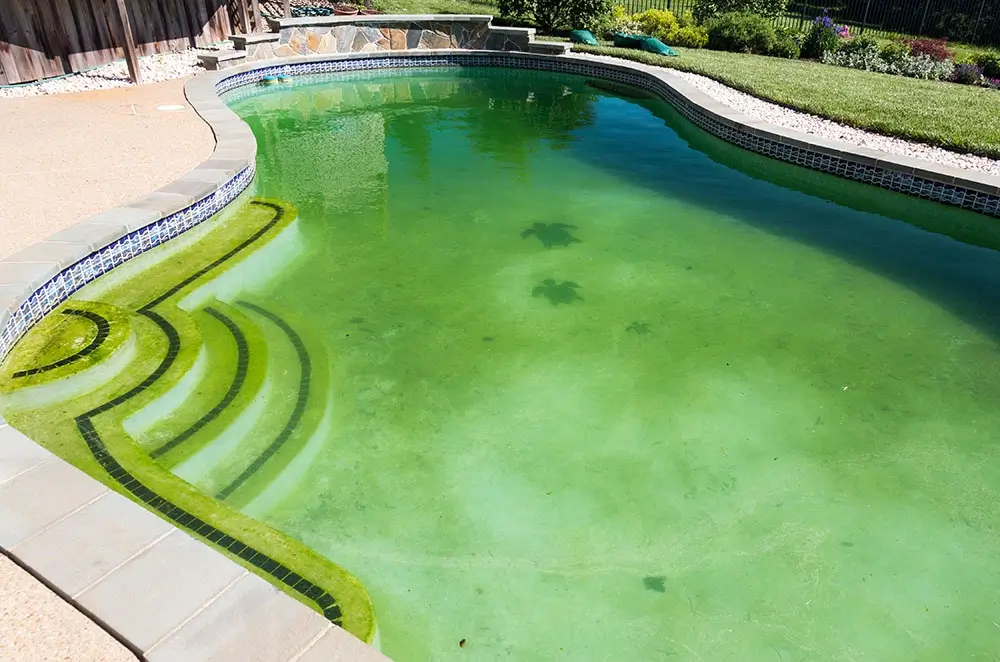
Woke up to a green pool? You’re not alone—this is one of the most common issues for pool owners in Central Texas. Between intense heat, heavy rains, and high pollen levels, pools in Austin can turn green fast.
The good news: in many cases, you can restore your pool in 24–48 hours—if you take the right steps quickly.
This guide walks you through exactly what to do (and when it’s time get professional pool help).
Why Pools Turn Green So Quickly in Austin
A green pool is almost always caused by algae growth, which thrives in warm, unbalanced water.
Common triggers in Austin include:
- High temperatures accelerating algae growth
- Sudden rainstorms diluting chlorine levels
- Low or zero stabilizer (CYA), allowing chlorine to burn off quickly in the sun
- Pollen and debris feeding contaminants
- Inconsistent cleaning or filtration
Once chlorine drops too low, algae can take over in less than a day.
What You’ll Need Before You Start
Before beginning, gather:
- Pool test kit or test strips (capable of measuring CYA)
- Liquid chlorine or granular shock
- Pool brush (for walls and floor)
- Vacuum (manual or automatic)
- Skimmer net
Important: Avoid guessing on chemicals—accurate testing is key to fixing the problem quickly.
Step 1: Test and Balance the Water (Including CYA)

Start by testing:
- pH
- Chlorine (free & total)
- Alkalinity
- Cyanuric Acid (CYA / stabilizer)
Target ranges:
- pH: 7.2–7.4 (slightly lower helps chlorine work better)
- CYA: ~30–50 ppm for most residential pools
Why CYA matters:
If your CYA is low or zero, chlorine gets destroyed by sunlight very quickly—especially in Texas heat. That means even if you add chlorine, it won’t last long enough to prevent algae, leading to a green pool.
If CYA is too low:
- Add stabilizer before or alongside your treatment plan
- If pH is too high, lower it before shocking. High pH reduces chlorine effectiveness.
Step 2: Remove Debris
Use a skimmer net to remove:
- Leaves
- Bugs
- Dirt and organic matter
Why this matters:
- Debris consumes chlorine and slows down the cleanup process.
- The cleaner your pool is before shocking, the faster recovery will be.
Step 3: Brush the Entire Pool
Thoroughly brush:
- Walls
- Floor
- Steps
- Corners
Focus on shady areas and spots with visible algae.
Why this matters:
Brushing breaks up algae colonies, allowing chlorine to kill them more effectively.
Step 4: Shock the Pool (Heavy Chlorination)

Now it’s time to kill the algae.
Use either:
- Liquid chlorine, or
- Granular shock (calcium hypochlorite or dichlor, depending on your needs)
Apply a strong shock treatment:
- Follow dosage based on pool size
- For green pools, you’ll typically need a higher-than-normal shock level
Pro tip: Shock in the evening to prevent sunlight from burning off chlorine too quickly.
Step 5: Run Your Pump Continuously
Keep your filtration system running 24 hours a day during treatment.
This helps:
- Circulate chemicals evenly
- Filter out dead algae
- Prevent algae from resettling
If your pump isn’t running efficiently, this process will take much longer.
Step 6: Vacuum and Clean the Filter
As algae dies, it settles at the bottom of the pool.
- Vacuum daily (manual is best for heavy algae)
- Clean or backwash your filter frequently
Why this matters:
Dead algae can make your pool look cloudy even after it’s been treated.
Step 7: Re-Test and Repeat if Needed
After 24 hours:
- Test chlorine, pH, and CYA again
- Check water clarity
If the pool is still green or cloudy:
- Repeat shock treatment
- Continue brushing and filtering
What to Expect (Timeline)
Within 24 hours:
Green color fades to cloudy blue
Within 48 hours:
Water should begin clearing significantly
Beyond 48 hours:
If still green → deeper issue likely present
When DIY Isn’t Enough
Sometimes, a green pool won’t recover with basic treatment.
Call a professional if:
- Algae keeps returning
- Water stays cloudy after repeated shocks
- CYA levels are difficult to stabilize
- You suspect filter or circulation issues
- The pool is dark green or black (severe algae bloom)
Professional service can:
- Accurately diagnose chemistry issues (including stabilizer problems)
- Use commercial-grade treatments
- Restore your pool faster and more reliably
How to Prevent a Green Pool in the Future
Once your pool is clear, keep it that way:
- Maintain proper chlorine levels consistently
- Keep CYA in the proper range
- Clean your pool weekly
- Run your pump daily (especially in summer)
- Stay ahead of storms and debris
- Schedule regular professional maintenance
Final Thoughts
A green pool might look like a disaster—but with the right approach, it’s often fixable in just a couple of days.
The key is acting fast, testing all critical levels (including CYA), using the right type of shock, and knowing when to bring in expert help.
If your pool has turned green and you don’t want to deal with the hassle, professional cleaning can save you time, stress, and potentially costly repairs.


Leave a Reply