
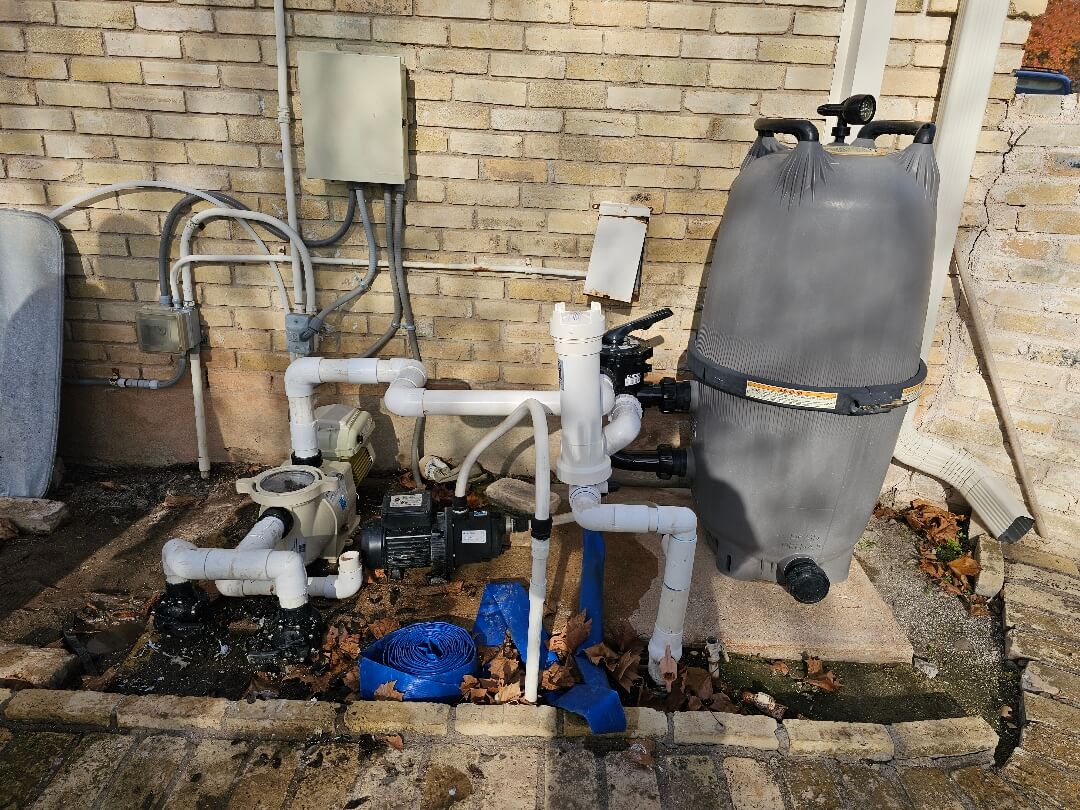
What Is an Ozone Pool Sanitizer?
An ozone pool sanitizer is a supplemental water treatment system that uses ozone gas (O₃) to help destroy contaminants in swimming pool water.
Ozone is a powerful oxidizer that helps break down:
- Organic contaminants
- Body oils
- Sunscreen
- Sweat
- Chloramines
- Certain bacteria and microorganisms
Like UV systems, ozone systems are designed to work with chlorine, not replace it.
A properly balanced pool still requires:
- Chlorine or another primary sanitizer
- Proper pH balance
- Filtration
- Circulation
- Regular water testing
The purpose of an ozone system is to reduce the workload placed on chlorine and improve overall water quality.
How Does an Ozone Pool System Work?
An ozone system creates ozone gas using oxygen from the air.
The process typically works like this:
- Air passes through an ozone generator.
- The system converts oxygen molecules (O₂) into ozone (O₃).
- Ozone is injected into the pool plumbing.
- The ozone reacts with contaminants in the water.
- The treated water returns to the pool.
Ozone is extremely reactive, which allows it to oxidize contaminants quickly.
After reacting with contaminants, ozone naturally converts back into oxygen.
What Does an Ozone Pool System Do?
An ozone system provides several benefits when properly installed and maintained.
Reduces Chlorine Demand
One of the biggest advantages of ozone is its ability to reduce the amount of work chlorine has to do.
Ozone helps oxidize contaminants before chlorine is consumed.
This can help reduce:
- Chlorine usage
- Chemical adjustments
- Chlorine odor
For Austin homeowners, where pools experience intense summer conditions, reducing chlorine demand can be a significant benefit.
Reduces Chloramines
Chloramines are created when chlorine reacts with contaminants introduced by swimmers.
They are responsible for:
- Strong chlorine smell
- Eye irritation
- Skin dryness
Ozone helps break down these compounds, improving swimmer comfort.
Improves Water Clarity
Ozone can help remove organic compounds that contribute to:
- Cloudy water
- Dull appearance
- Poor water quality
Many homeowners notice water that looks cleaner and feels more comfortable.
Helps Reduce Organic Contaminants
Pools collect many contaminants throughout the swimming season.
Common sources include:
- Sunscreen
- Lotions
- Sweat
- Leaves
- Environmental debris
Ozone helps oxidize these contaminants before they consume chlorine.
Why Add an Ozone System to an Existing Pool?
Many homeowners think ozone systems are only installed during new pool construction.
However, ozone systems can often be added to an existing pool as an equipment upgrade.
An ozone system can typically be installed near existing equipment, working alongside:
- Pool pump
- Filter
- Heater
- Salt chlorine generator
- Automation system
Benefits of Adding Ozone to an Existing Pool
1. Cleaner, Fresher Water
Ozone provides an additional oxidation step beyond traditional chlorine.
Benefits include:
- Improved water clarity
- Reduced chemical smell
- Better swimmer comfort
2. Lower Chlorine Demand
Ozone helps remove contaminants that normally consume chlorine.
This can help:
- Extend chlorine effectiveness
- Reduce chemical consumption
- Maintain more consistent water quality
3. Better Performance During Austin Summers
Central Texas pools experience demanding conditions:
- High temperatures
- Strong sunlight
- Heavy pool usage
- Long swimming seasons
These conditions increase chlorine demand.
An ozone system can help reduce the amount of work required from chlorine during the busiest months.
4. Improved Comfort for Swimmers
By reducing chloramines, ozone can help create a more comfortable swimming environment.
Benefits include:
- Less eye irritation
- Reduced chlorine odor
- Softer-feeling water
Does Ozone Replace Chlorine?
No.
This is one of the biggest misconceptions about ozone pool systems.
Ozone:
- Does not maintain a sanitizer residual throughout the pool
- Does not protect the pool when circulation stops
- Does not completely replace chlorine
A properly maintained pool still requires a primary sanitizer.
The ideal combination is:
Ozone + Chlorine + Proper Filtration + Balanced Chemistry
Ozone vs UV Pool Sanitizers
Ozone and UV systems both improve water quality, but they work differently.
UV Systems
UV uses ultraviolet light to treat water as it passes through a chamber.
UV is especially effective at:
- Breaking down chloramines
- Inactivating microorganisms
- Improving swimmer comfort
Ozone Systems
Ozone is a powerful oxidizer that reacts chemically with contaminants.
Ozone is especially effective at:
- Breaking down organic waste
- Reducing chlorine demand
- Oxidizing contaminants
Why Ozone and UV Work Better Together
Many premium pool water treatment systems combine ozone and UV because the technologies complement each other.
This combination is called an Advanced Oxidation Process (AOP) system.
Together:
- UV provides high-energy treatment
- Ozone provides powerful oxidation
- The two technologies create hydroxyl radicals that aggressively break down contaminants
The result is a more complete water purification approach.
Benefits of combining ozone and UV include:
- Improved water clarity
- Lower chlorine demand
- Reduced chloramines
- Better swimmer comfort
- Enhanced oxidation of contaminants
For homeowners looking for premium water quality, an AOP system can provide benefits beyond either technology alone.
Popular Ozone Pool Systems
Some of the most common ozone and AOP systems used in residential pools include:
- Paramount ClearO3
- Delta UV AOP systems
- Pentair ozone and AOP systems
- Jandy water purification systems
Paramount ClearO3 Ozone System
The Paramount ClearO3 is one of the most recognized ozone systems used in residential pool applications.
It is commonly installed on pools looking to improve water quality while reducing chemical demand.
The ClearO3 system works by injecting ozone into the pool circulation system where it reacts with contaminants before returning treated water to the pool.
Benefits include:
- Reduced chlorine demand
- Improved oxidation
- Reduced chloramines
- Cleaner-feeling water
- Compatibility with many pool equipment setups
The Paramount ClearO3 is especially popular in premium residential pool installations where homeowners want improved water quality without relying solely on chlorine.
Delta AOP Systems: Combining Ozone and UV
Delta AOP systems are designed to combine the benefits of both ozone and UV technology in one system.
Advanced Oxidation Process systems use:
- Ozone generation
- UV-C light
- Oxidation reactions
to create hydroxyl radicals, which are highly effective at breaking down contaminants.
Benefits of Delta AOP systems include:
- Powerful oxidation
- Reduced chemical usage
- Improved water clarity
- Reduced chloramines
- Enhanced swimmer comfort
For homeowners who want the benefits of both ozone and UV, an AOP system provides a convenient all-in-one solution.
Common Ozone Pool System Problems and Fixes
Like any pool equipment, ozone systems require maintenance.
Problem 1: Ozone Generator Is Not Producing Ozone
Symptoms
- No improvement in water quality
- Ozone indicator is off
- System appears inactive
Possible Causes
- Failed ozone cell
- Electrical issue
- Airflow restriction
- Damaged power supply
Fixes
Check:
- Power connection
- System indicators
- Air supply
- Ozone generator components
Problem 2: Ozone Injector Is Not Pulling Ozone
Symptoms
- Ozone generator works but ozone is not entering the water
Possible Causes
- Failed injector
- Low water flow
- Dirty injector
- Plumbing issue
Fixes
Check:
- Pump operation
- Filter pressure
- Injector condition
- Water flow rate
A properly operating injector is required for ozone to enter the plumbing system.
Problem 3: Ozone Check Valve Failure
Most ozone systems include a check valve to prevent pool water from flowing backward into the ozone generator.
Symptoms
- Water inside ozone tubing
- Ozone generator damage
- Reduced performance
Cause
A failed check valve allows water to travel backward.
Fix
Replace the ozone check valve.
This is an important maintenance item because water intrusion can damage ozone equipment.
Problem 4: Ozone System Has Low Output
Symptoms
- System operates but water quality does not improve
Possible Causes
- Aging ozone cell
- Dirty components
- Incorrect sizing
- Poor water flow
Fix
Inspect the system and verify:
- Correct sizing
- Proper installation
- Component condition
Problem 5: Poor Results Due to Incorrect Expectations
A common issue is expecting ozone to completely replace pool chemicals.
Fix
Remember:
Ozone is a supplemental treatment system.
The best results come from combining:
- Ozone
- Chlorine
- Proper filtration
- Balanced water chemistry
Ozone vs Saltwater Pool Systems
These technologies serve different purposes.
Saltwater Systems
A salt chlorine generator creates chlorine automatically.
Benefits:
- Automated chlorine production
- Reduced manual chemical additions
- Consistent sanitizer levels
Ozone Systems
Ozone improves oxidation and water quality.
Benefits:
- Reduced contaminants
- Lower chlorine demand
- Improved swimmer comfort
Many premium pools combine:
- Salt chlorine generator
- Ozone or AOP system
- Proper filtration
for improved water quality.
Is an Ozone Pool System Worth It?
An ozone system can be a valuable upgrade for homeowners who want:
- Cleaner water
- Reduced chemical usage
- Better swimmer comfort
- Premium water quality
Ozone is especially beneficial for:
- High-use pools
- Large residential pools
- Pools with frequent guests
- Homeowners sensitive to chlorine
- Pools operating year-round
For Austin homeowners, ozone can be especially helpful during hot Texas summers when organic contamination and chlorine demand are highest.
Frequently Asked Questions
Does ozone replace chlorine in a pool?
No. Ozone is a supplemental oxidizer and works with chlorine.
Is ozone better than UV?
Neither technology is better in every situation. Ozone is a powerful oxidizer, while UV is excellent at treating microorganisms and chloramines. Many premium systems combine both.
Can ozone be added to an existing pool?
Yes. Many ozone systems can be installed as an equipment upgrade.
What is the advantage of ozone and UV together?
Combining ozone and UV creates an advanced oxidation process that provides stronger contaminant breakdown than either technology alone.
What is the best ozone system for a residential pool?
Popular options include Paramount ClearO3 and Delta AOP systems depending on the pool design and desired level of water treatment.
Improve Your Pool Water Quality With Aqua Clear Pool Care
An ozone system can be an excellent upgrade for homeowners looking to improve water quality, reduce chemical demand, and create a more comfortable swimming environment.
For homeowners looking for the highest level of water treatment, combining ozone and UV technology through an AOP system can provide a powerful approach to reducing contaminants and improving swimmer comfort.
At Aqua Clear Pool Care, we help homeowners throughout Austin, Round Rock, Cedar Park, Georgetown, Leander, Pflugerville, Lakeway, Bee Cave, Dripping Springs, and surrounding Central Texas communities evaluate and maintain advanced pool water treatment systems.
From ozone systems and UV sanitizers to pumps, filters, heaters, and automation, our team helps homeowners get the best performance from their pool equipment.


Leave a Reply